The Evolution of AI Agents: How to Reinvent the Process for Digital Workers
On November 14, at the FINOBOD forum in Tashkent, I talked about how we at Ragify went from a “side chat” to a digital worker inside the process. Here is the report in expanded form: six principles and the mechanisms behind them, levels of autonomy, the structure of the credit pipeline, results on the standard and the order of launching the pilot.

Short
- There are four stages of AI found in companies. The highest is a digital worker with a role, authority and a manager, triggered by process events.
- Agents get stuck in the “side chat” role when the process is not described, the trust is all or nothing, and the agent cannot be controlled.
- The Ragify methodology is based on six principles, and each of them is a mechanism of the platform, and not a wish in the instructions to the agent.
- On the benchmark set, a batch of 26 documents is processed in approximately 10 minutes, with extraction accuracy of 95% and completeness of 98%.
- It’s worth starting with a decision map and shadow mode, and expanding the agent’s powers based on measured results.
About the session at FINOBOD
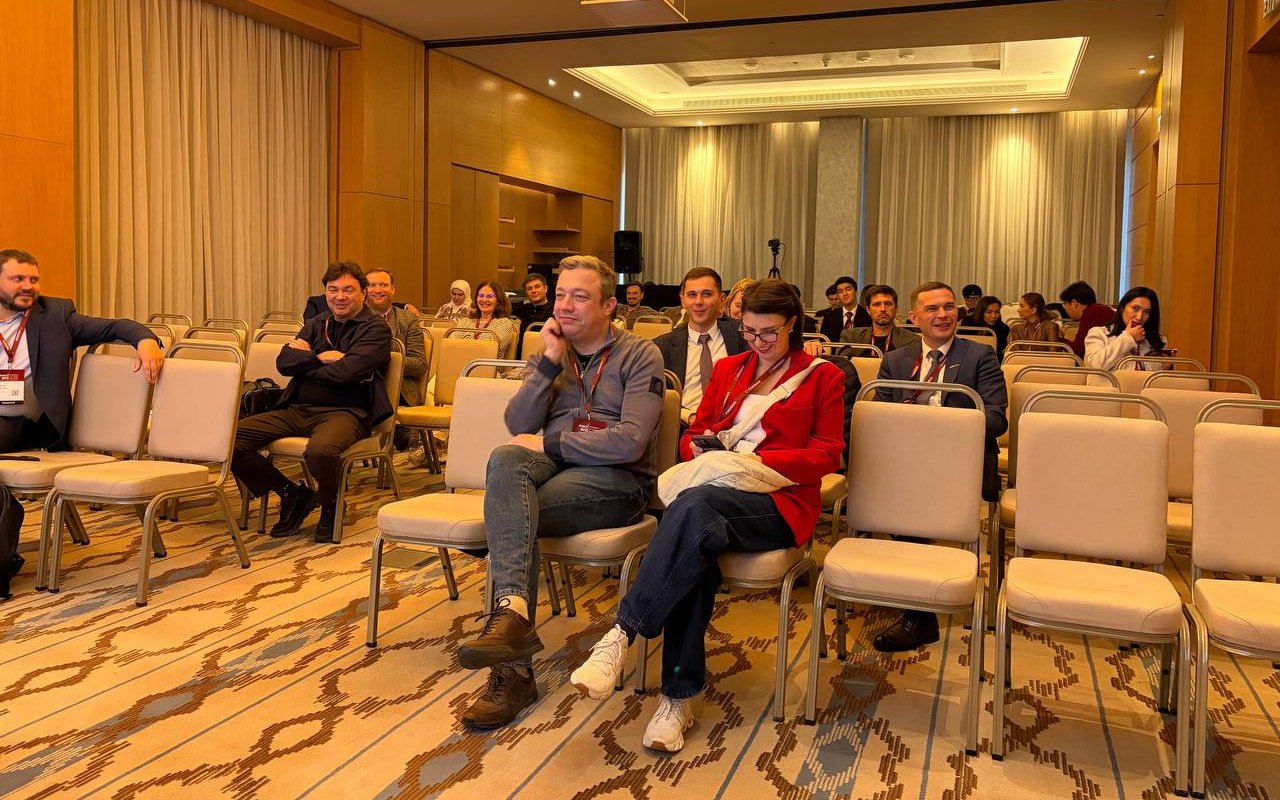
FINOBOD - Tashkent Fintech International Forum - was held on November 13-14, 2026 at the Hyatt Regency Tashkent with the support of the Ministry of Digital Technologies of Uzbekistan, the Ministry of Economic Development of Russia and the Trade Representation of Russia in Uzbekistan. Our session “The evolution of AI agents. Methodological approaches to transforming business processes for the collaboration of people and “digital workers”” was held on November 14 from 15:00 to 16:00 in hall 1 Samarkand, in the block of the main program “Business Transformation”.
The moderator was Andrey Almazov, director of project work at the National Medical Knowledge Base Association and member of the expert council of the Skolkovo biomedical cluster. The second speaker of the session was Ivan Kabeshov, head of the internal development, platform and integration solutions block at RSHB-Intech. I spoke online, my colleagues from RESTART were in the hall. Below is my part of the session along with what did not fit into the regulations.
Article on RBC
20.11.2026 · RBC Companies · interview. Evgeny Grechachin - “An AI agent needs onboarding, like a new employee”. In the interview - a look at the market: why AI agents in banks get stuck on the pilot and how to share decisions between people and machines. This article contains the entire report: six principles, the structure of the credit conveyor, measurement against the standard and presentation. All group publications are in the section "Media about us".
Presentation of the report
Report on FINOBOD, 15 slides: four stages of AI, digital worker onboarding, six principles of Ragify, credit pipeline, benchmark results and five steps to launch. PDF, Russian language.
Download PDFFour stages of AI
It is convenient to distinguish stages according to two criteria: who starts the work and who transfers the result to the working system.
- Predictive AI. Scoring and forecast. The model produces a number, the person makes the decision. Banks have been working this way for about twenty years.
- Generative assistant. The model writes the text and answers questions. The work is started by a person’s question, and he also transfers the answer to the system. This is “side chat”.
- Executing agent. The agent itself breaks down the task into steps, calls tools, and reads and writes data to the systems. The result enters the system without a person, but the work is still started by a person.
- Digital worker. The agent is integrated into the process along with people. It has a role and authority, it is triggered by process events, it assigns tasks to people and receives tasks from them, and the manager sees what it is doing.
We have built the fourth stage on Ragify. Next - about what was needed for it.
Digital worker onboarding
A person who joins a company is given a job description, access to the necessary systems, a manager and is introduced to the processes. A digital worker needs the same set:
- job description: what the agent does and does not do. It is convenient to start it with the result that a colleague is waiting for: the analyst needs a package with sorted documents and marked discrepancies;
- access to only what you need: skills and systems by role. To check the completeness of the package, it is enough to see its composition and requirements; the right to change the conditions for consideration of the application is redundant for this;
- manager: a person or coordinating agent who gives instructions to colleagues;
- place in the process: who is responsible for what and who to go to with questions;
- emergency situation: when to stop and call the person.
It is useful to test the instructions on deviation. If the value was found only in the backup source, the agent should show it to the employee and wait for confirmation, and not write it down silently. It is easiest to give skills and tools to an agent. To explain his role and behavior in an emergency situation, the process must first be described. Therefore, the main question of the transition to digital workers is methodological: how to rebuild the process.
Why agents remain "chat on the side"
We stepped on each of the three reasons ourselves while building Ragify.
- The process lives in heads and documents. The list of documents may be in the regulations, and only the manager knows the procedure for action if the set is incomplete. As long as he suggests the next step with each new letter, the technique rests on him.
- All-or-nothing trust. If one trust level is assigned to the entire application, the analyst has to confirm even scan recognition. The other extreme is more dangerous: good results in packet parsing become a reason to give the agent any actions, including exclusions from the policy.
- The agent cannot be controlled. The agent made a mistake on the tenth step out of fifteen, and the first nine were paid requests to external systems. If you can only start from the beginning, you will have to pay for these requests a second time.
The first and third principles below answer the first reason, the fourth and fifth - the second, the sixth - the third. The second sets the frame for the rest.
Principle 1. The process is set by settings
A loan application in Ragify is not a program, but a setting: what documents are needed, what fields to extract from them, what to compare with what, what checks to go through according to the credit policy, what indicators to calculate and what status route the application follows. Also, without programmers, a purchasing or hiring package is created.
The person and the agent work according to the same description. If the list of required documents has changed, the manager sees the new list, and the agent checks incoming mail using it. There is no need to separately rewrite the instructions to the agent and send the letter to analysts.
Principle 2: Agent works as an employee
An agent card in Ragify is structured like an employee card: job description, skills (available to the system agent), a role in the same role model as people, a work log and a supervisor who can stop the agent or remove him from work.
An agent who works at the request of a person receives the rights of that person and nothing more. It’s easy to check this upon acceptance: give the same instructions on behalf of the manager and on behalf of the analyst. If an action is available only to the analyst, the manager's assignment should not lead to it. How such rules are structured for agents in general - in the material about safe AI-agent automation.
Principle 3. The model understands, the formulas count
Ragify calculates everything that can be calculated using formulas of the methodology: indicators, limits, maximum loan amount. The model reads documents, extracts data, explains the result and conducts a dialogue. The model does not count money.
The financial analysis method on which we built the conveyor contains 64 calculations, and each has its own regulation cell. Therefore, the calculation is reproducible, and the auditor can go from the final amount to the point of the regulations. When the analyst asks the agent what would happen at 24 months, the agent runs the same formulas with a different parameter and explains the difference.
Principle 4: Autonomy is determined by the risk of a decision.
Each process decision belongs to one of the levels. The decision moves up a level only when the numbers support it.
| Level of autonomy | Examples of solutions | Who is responsible |
|---|---|---|
| Only human | Allow a violation of the credit policy, accept the risk exception | Authorized employee; the agent has no such action |
| The agent proposes, the person confirms | Write down the value, take data from a backup source, make a paid request to an external service | The employee who confirmed the offer |
| The agent does it himself | Recognize, extract, verify, count, collect form | Process owner - by quality metrics |
| Autonomous chain | Agents transmit the result to each other and complete the section | Target for areas with low risk and proven quality |
The level is changed by setting, not by rewriting the agent. An agent that parses clients’ mail works in two modes: “with verification”, it prepares a letter to the client and the manager sends it; “independently”, it writes to the client itself, and the person checks what has been done and can roll back.
A practical example showed why a border is needed. The agent once himself “admitted” a broken credit policy check and came up with a convincing justification for this. Outwardly, the task looked completed, although none of the employees made the decision to exclude. Since then, the agent without a person does not allow policy violations, and this is a rule of the platform: the model can violate a request in the instructions, but it will not perform an action that the agent does not have.
Principle 5: Trust is tested
Each value has a source: a document and a page or record in an external system. Values from different documents are compared with each other. When they diverge, the analyst receives the divergence along with both bases and does not leaf through the entire packet.
The agent's response is checked in two layers. First programmatically: every number in the answer must be found in the data that the agent received. Then, if necessary, a separate checking model looks to see if each assertion is confirmed. If there is no confirmation, the agent rewrites the response or the response is left with the note “Data needs to be double-checked.” Doubt is visible in the answer itself, and a conclusion without a basis will not appear in conclusion next to the verified figures.
Before sending to an external model, full names, tax identification numbers and names are masked, and the models can be kept within the bank’s environment - Restart AI Platform deployed on the customer's servers.
Principle 6: Agents can be controlled
The agent dashboard in Ragify shows who is doing what right now, how much has been done, where are the errors and stoppages.
- The stop can be soft, when the agent completes the current step, and immediate, when it does not take any new actions.
- If there is a failure, the work is repeated from the point of failure. What is done is not repeated, the paid request does not go through twice.
- If an agent needs a human decision, the human has a task with a deadline. Instructions go in both directions: from person to agent and from agent to person.
- Agents are launched by triggers on process events: “a letter has arrived”, “a document has been loaded”, “the application has moved to status”.
Triggers are what differentiate a digital worker from an assistant. The agent does not need to be called into the chat: it reacts to the progress of the process, like an employee who sees his turn.
Credit pipeline: three channels, one pipeline, people and agents
We demonstrated the technique on the credit conveyor. The pilot device and fuses are disassembled article about the pilot of the credit conveyor, here is the diagram.
- Three channels. By mail, the client sends documents to the bank's mailbox; The mail reception agent sorts the attachments into the company's packages, checks for completeness and writes to the client a further request for what is missing, and the response with the documents ends up in the package that has already been started. In the chat, the manager writes to the agent “create a package using such and such TIN” and attaches files. When uploading manually, the manager drags and drops files into the package card.
- One conveyor. Then the path is general: recognize documents, determine the type, extract data, compare documents with each other, obtain information from open registers, check an application for a credit policy, calculate indicators and the maximum amount, collect forms and a draft conclusion.
- People and agents. The manager's agent, using one TIN, gives a preliminary assessment using open sources and collects the package. The analyst’s agent answers questions about the application (“why is this amount?”, “What about 24 months?”), shows what data is missing, and suggests actions, and the analyst decides. The methodologist agent answers policy questions; fellow agents also delegate questions to it.
Results on the standard
The numbers were obtained by measuring on a reference set of documents. Time refers to preparing the package for analysis, including scan recognition; The term for issuing a loan cannot be determined.
| What was measured | Manually | On Ragify |
|---|---|---|
| Parsing a package of documents | Watch | Approximately 10 minutes per batch of 26 documents. |
| Account cards | About 40 minutes | Included in the package |
| Every contract | About 15 minutes | Included in the package |
| Retrieval Accuracy | — | 95 % |
| Extraction completeness | — | 98 % |
Accuracy is the proportion of correct values among the extracted ones, completeness is the proportion of those found among the expected ones. The analyst then searches for the missing field manually, so we monitor completeness along with speed, and analyze gaps in the fields on which the amount depends separately.
There is nothing credit-related in Ragify's code. Leasing, compliance, factoring or verification of the counterparty are set up in the same way, with settings: the composition of the package and the basis for decisions change, but the procedure for reconciliation and transfer of deviations remains the same.
Five steps to become digital workers
- Decompose the process into objects, documents, decisions and roles. It’s convenient to go through one application at a time with a manager and an analyst and note each place where someone makes a choice. The question “who makes what decision and on what data” is more useful than the question “what to automate.”
- Mark decisions by risk: only a person, an agent proposes, an agent does it himself. The result is a matrix of authority that can be aligned with risk and security.
- Formalize the methodology. For a required field, indicate an acceptable source, for an indicator - a formula, for a violation - the procedure for consideration.
- Run "in the shadows". The agent works in parallel with people and does not influence decisions. Its result is compared with the standard in terms of accuracy, completeness and time, and the step at which the error occurs is found.
- Expand autonomy based on metrics. The decision moves to the level of “the agent does it himself” when the numbers confirm this. Where the cost of error is higher, confirmation remains.
How people's roles change
The credit analyst ceases to be an input operator. The transfer of indicators and reconciliation is carried out by the conveyor, and the analyst becomes a controller and an expert on exceptions: he analyzes discrepancies and decides on broken checks. To do this, he needs primary documents at hand and the opportunity to return the package for clarification.
The methodologist becomes the owner of the rules by which both people and agents work. He will have to distinguish between a recognition error and a gap in the methodology: in the first case, he needs to return to the document, in the second, he needs to write down the rule for all participants.
Where to park the car
The evolution of agents, as I see it, is not an increase in the “smartness” of the model, but an increase in the trust that the process can convey to the agent. Trust is built methodically: the process is described by settings, rights are specified by role, the boundary of autonomy depends on risk, each value is verifiable, and the work of agents can be controlled.
Eliyahu Goldratt, author of The Goal and Theory of Constraints, said, “Automation is good as long as you know exactly where to put the machine.” The technique I talked about on FINOBOD is about where to place a digital worker. More details about the platform can be found on the page Ragify.
Frequently asked questions
How is a digital worker different from a chatbot with access to systems?
A chatbot is triggered by a human question, a digital worker is triggered by a process event. It has a role in the role model, rights, a manager and a work log, and its decisions are marked by levels of autonomy.
Is it necessary to start with mail?
No. You can start by loading into the card and first test the extraction and reconciliation on already assembled packages. It is convenient to evaluate the receipt of letters and correspondence with the client separately when the extraction is confirmed.
Is it possible to work with agents if customer data cannot be taken outside the perimeter?
Yes. Models can be kept in the bank environment. If an external model is used, full name, INN and names are masked before sending.
What happens if the agent makes a mistake in the middle of the process?
The manager sees this on the console and can stop the agent gently or immediately. After a failure, work continues from the point of failure, and the paid request does not go away a second time.
How do you know that an agent can be trusted to make a decision?
According to shadow mode numbers: the agent's result is compared with the standard in terms of accuracy, completeness and time, and errors in the fields on which the amount depends are analyzed separately. Violations of credit policy remain with the person in any case.
Let's discuss your environment
Describe the task, current systems, constraints, and expected results. We will offer a practical first step: diagnostics, pilot, audit, roadmap or project team.